
Best Liveness Detection Tools for KYC Providers in 2026
A buyer's guide comparing liveness approaches for KYC flows and what to prioritize when adding face-based fraud checks and anti-spoofing in 2026.
Selecting the best liveness detection software has shifted from a checkbox exercise into a strategic procurement decision for any KYC provider that wants to survive the synthetic media era. The face-matching step that once anchored remote onboarding now sits on shifting ground: a convincing video of a real customer, a generative face that never existed, or a manipulated stream injected straight into the verification pipeline can all defeat a camera-based check that was state of the art only two years ago. For identity verification vendors, banks, and fintech fraud teams, the question is no longer whether to add a face-based fraud layer, but which liveness approach holds up against attacks that are being industrialized faster than most detection roadmaps can move.
"Deepfake fraud attempts surged 2,137% over three years and now account for roughly 6.5% of all global fraud attacks, while injection attacks that bypass the camera entirely grew nine-fold year over year.", Entrust 2026 Identity Fraud Report
What the best liveness detection software actually needs to do in 2026
The best liveness detection software in 2026 is judged on how it performs against three distinct attack families, not a single benchmark score. Presentation attacks reach the camera as physical artifacts: printed photos, replayed videos on a screen, cutout masks, and silicone 3D masks. Injection attacks skip the lens completely, feeding a synthetic or pre-recorded stream into the device camera buffer or the verification API through emulators and virtual cameras. Deepfake and synthetic media attacks combine both, using generative models to produce a face that passes basic motion and texture checks.
Most KYC liveness tools were architected for the first category. The market has spent a decade hardening presentation attack detection, formalized in the ISO/IEC 30107-3 standard and verified through iBeta Quality Assurance testing. That foundation matters, but it does not cover the threats now driving losses. According to PwC's 2026 fraud outlook, synthetic identity fraud alone cost the global financial sector an estimated $31 billion in 2025 and is projected to exceed $40 billion in 2026. Gartner has projected that by 2026, roughly 30% of enterprises will no longer consider standalone identity verification solutions reliable in isolation because of deepfake attacks on face biometrics.
When KYC teams evaluate biometric liveness verification, the practical decision usually comes down to four buyer priorities:
- Security depth: coverage across presentation, injection, and deepfake vectors, not just one.
- Conversion impact: how much friction the method adds to legitimate users and abandonment rates.
- Integration effort: SDK, API, or hybrid deployment and how it slots into an existing KYC flow.
- Evidence and certification: independent test results such as iBeta PAD levels and published false acceptance figures.
Comparing the leading liveness detection approaches
The category splits into several technical families, each with a different trade-off between security and user experience. The table below summarizes how the main approaches compare for a KYC buyer adding face-based fraud checks.
| Approach | How it works | Deepfake / injection resistance | User friction | Best fit |
|---|---|---|---|---|
| Active liveness | User performs prompted actions (blink, turn, smile) | Moderate against replay, weak against real-time deepfakes | High (multi-step) | Step-up checks, high-risk events |
| Passive liveness (texture/depth) | Analyzes a single frame or short clip for spoof artifacts | Moderate against print/screen, variable against generative faces | Low (one capture) | High-volume onboarding |
| Challenge-response motion | Random prompts plus motion analysis | Moderate, defeated by animated deepfakes | Medium to high | Regulated step-up flows |
| Document plus selfie matching | Compares live capture to ID portrait | Low on its own against synthetic faces | Low | Baseline KYC, needs a liveness layer |
| rPPG blood-flow liveness | Reads subtle skin color changes from real blood flow (pulse signal) | Strong, requires a real circulatory signal a synthetic face cannot reproduce | Low (passive capture) | Anti-spoofing facial analysis layered into KYC |
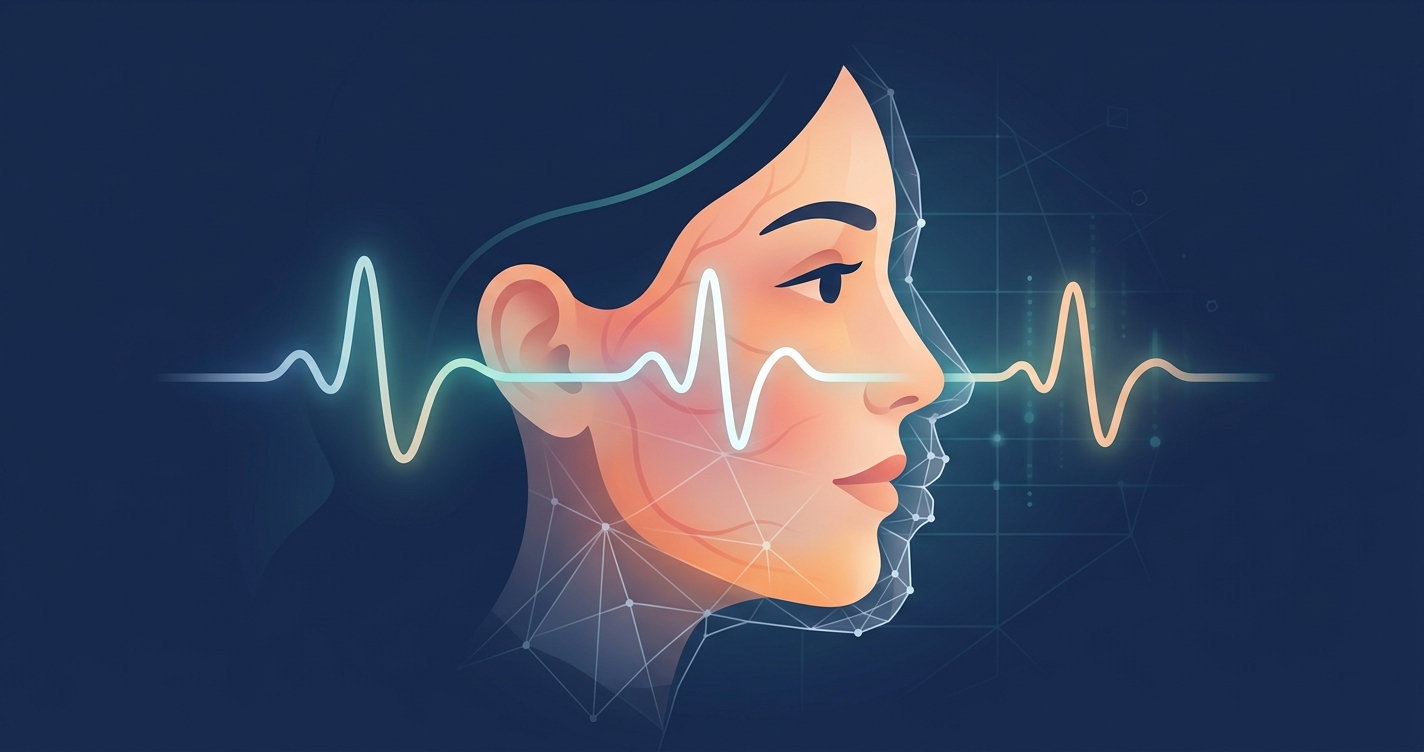
No single row is a complete answer, which is the central finding for buyers. The strongest 2026 architectures stack a low-friction passive method for the general population with a physiological signal that generative pipelines cannot easily fake. Remote photoplethysmography (rPPG) belongs in that second group: it measures the minute color shifts in facial skin caused by the cardiac cycle, so a presented face must have a real pulse driven by real blood flow. A printed photo, a replayed video, a 3D mask, and a rendered deepfake all share the same weakness here, since none of them circulate blood.
Industry Applications for KYC and Fraud Teams
Banks and neobanks onboarding remotely
Account-opening fraud is the most targeted KYC moment because the payoff is immediate access to payment rails. Fraud teams adding a liveness layer typically prioritize passive capture to protect conversion, then route elevated-risk sessions to a deeper physiological or injection-aware check. The goal is to keep false rejection low for genuine applicants while raising the cost of a synthetic identity attempt high enough to push attackers elsewhere.
Identity verification vendors offering add-ons
For IDV vendors, liveness is increasingly a packaged identity verification add-on rather than a built-in afterthought. Buyers expect modular anti-spoofing facial analysis that can be enabled per customer, per risk tier, or per jurisdiction. Vendors that expose clear confidence scores and reason codes, rather than a binary pass or fail, give downstream fraud analysts the signal they need to tune thresholds.
Fintech and crypto platforms
Pseudonymous and high-velocity environments draw multi-accounting and bonus-abuse fraud that scales through automation. Here injection resistance matters most, because attackers operate at volume using virtual cameras and emulators. KYC liveness tools that bind the captured signal to genuine sensor data, and that can detect a fabricated stream, blunt scripted attacks more effectively than motion prompts alone.
Current research and evidence
The certification baseline has moved. iBeta introduced Level 3 Presentation Attack Detection testing in mid-2025 specifically to address advanced threats including high-fidelity 3D masks and deepfakes, going beyond the Level 1 and Level 2 tiers that most deployed systems were certified against. The ISO/IEC 30107-3 framework remains the reference methodology for PAD evaluation, but security researchers have repeatedly noted that it was scoped around physical presentation at the sensor and does not explicitly cover digital injection attacks. That gap is exactly where 2026 attack growth is concentrated.
The threat data reinforces the point. The Entrust 2026 Identity Fraud Report documented a 2,137% rise in deepfake attempts over three years and a nine-fold increase in injection attacks year over year. Sumsub's 2026 fraud analysis found deepfakes now represent a large and growing share of biometric fraud attempts, with AI-driven sophistication rising across financial services, crypto, and online platforms. Global identity fraud losses passed $50 billion in 2025 by Entrust's accounting, and PwC projects synthetic identity fraud costs alone climbing past $40 billion in 2026. Independent reviews of physiological liveness, including academic work on rPPG-based presentation attack detection, support the premise that a measurable pulse signal is difficult for current generative models to reproduce convincingly in real time, which is why blood-flow analysis has moved from research novelty to a practical KYC layer.
The future of liveness detection
Three shifts will define liveness procurement over the next two years. First, buyers will move from single-method checks to layered architectures that combine passive capture, injection detection, and a physiological signal, because no single technique covers all three attack families. Second, certification will keep tightening: expect iBeta Level 3 results and explicit injection-attack testing to become standard line items in RFPs, replacing generic claims of liveness support. Third, regulation will raise the documentation bar, with frameworks such as the EU AI Act treating biometric systems as high risk and demanding transparency about how detection decisions are made.
The practical implication for KYC providers is that liveness is becoming a portfolio decision. The teams that perform best will treat face-based fraud detection as a tunable stack, measuring not just spoof rejection but conversion, reason-code quality, and resilience against the injection and deepfake vectors that older benchmarks ignore. Methods grounded in something an attacker cannot synthesize, such as real blood flow, give that stack a foundation that does not erode every time generative models improve.
Frequently asked questions
What is the difference between liveness detection and deepfake detection?
Liveness detection confirms that a live person is present at capture, traditionally by rejecting physical spoofs like photos and masks. Deepfake detection identifies AI-generated or manipulated faces, including injection attacks fed straight into the pipeline. The strongest KYC stacks now need both, since a deepfake can pass a basic liveness check that was never designed to spot synthetic media.
Is iBeta certification enough when choosing liveness software?
iBeta testing against ISO/IEC 30107-3 is an important baseline, and the new Level 3 tier raises the bar for advanced threats. But the standard was scoped for presentation attacks at the camera, not digital injection. Buyers should ask for Level 3 results plus separate evidence of injection and deepfake resistance.
How does rPPG-based liveness resist deepfakes?
Remote photoplethysmography reads the subtle skin color changes caused by blood flowing through the face with each heartbeat. A printed photo, replayed video, mask, or rendered deepfake has no circulatory signal to detect, so the absence of a coherent pulse pattern flags the attempt regardless of how visually convincing the face appears.
Will adding a liveness layer hurt my conversion rate?
Not necessarily. Passive methods, including blood-flow analysis from a short normal capture, add little friction because the user does not perform prompted actions. Many KYC providers reserve higher-friction step-up checks for elevated-risk sessions, keeping the experience smooth for the majority of genuine applicants.
Circadify is addressing this space directly, building rPPG-based liveness that reads real blood flow to separate living people from synthetic media without adding capture friction to your KYC flow. To see how blood-flow anti-spoofing can layer into your existing identity verification stack, request an enterprise security demo.