
Deepfake Detection for Neobanks: Securing Remote Account Opening in 2026
Neobanks face a rising threat from AI-driven identity fraud. Learn how advanced deepfake detection is essential for securing remote account opening processes.
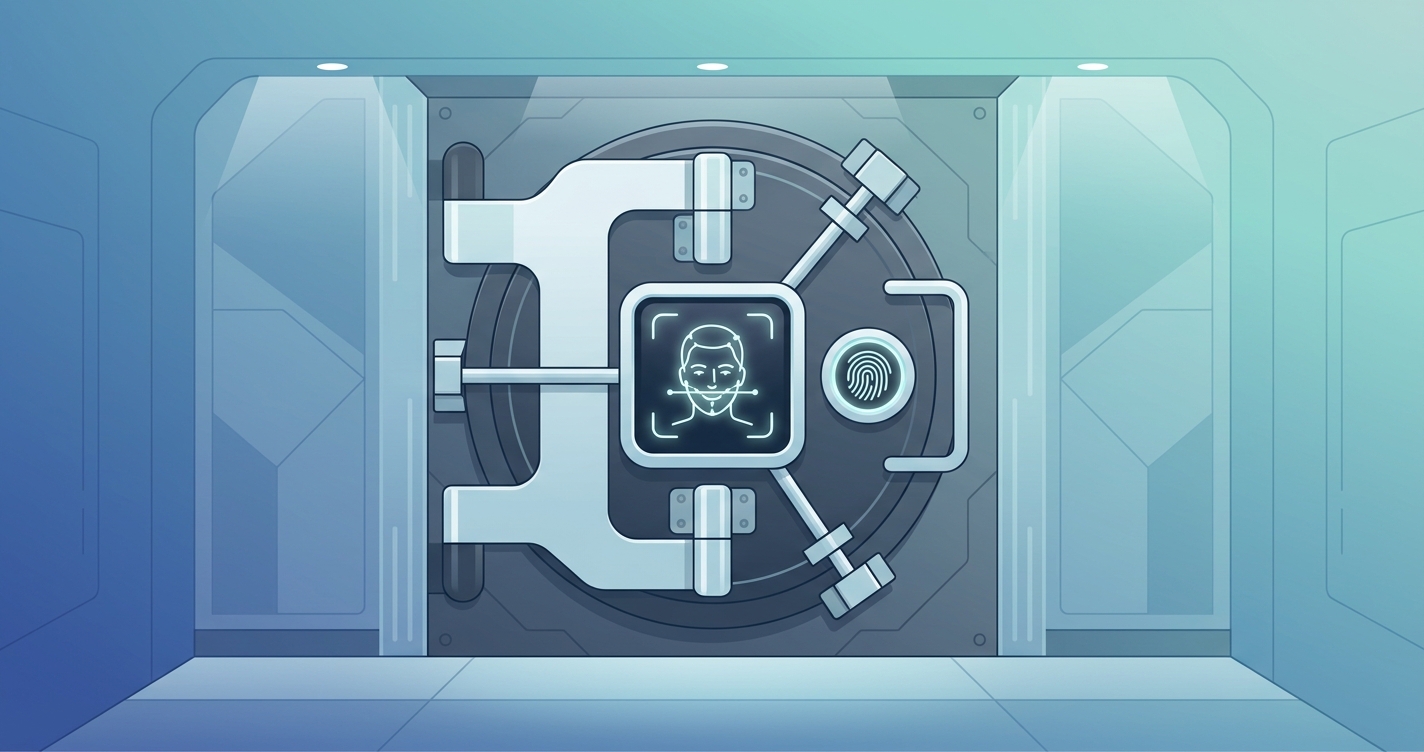
The rapid expansion of the neobank sector is built on the promise of frictionless, digital-first customer experiences. This focus on remote onboarding, however, has created a significant attack surface for sophisticated fraud. As legacy identity verification systems struggle to keep pace with generative AI, neobanks are becoming a prime target for fraudulent account openings facilitated by deepfake technology. The challenge moving into 2026 is no longer just identifying a valid ID, but verifying the living, breathing human presenting it.
"Deepfake incidents in the fintech sector increased by 700% in 2023, with 40% of all deepfake attacks now targeting the financial industry."
- Shufti Pro, 2024
The escalating threat to neobank onboarding
The core vulnerability for digital banks lies in the remote, automated nature of their Know Your Customer (KYC) and identity verification (IDV) processes. Fraudsters are exploiting these systems with AI-generated synthetic media, moving beyond simple presentation attacks like showing a photo to a camera. The primary threat now involves injection attacks, where a deepfake video is fed directly into the data stream of the onboarding application. This bypasses the device's camera entirely, making traditional liveness detection methods that look for blinking or head movement obsolete.
Effective deepfake detection neobank account opening protocols must now assume that a determined fraudster will not be using a simple spoof. The U.S. Treasury's Financial Crimes Enforcement Network (FinCEN) issued a direct alert in November 2024 (FIN-2024-DEEPFAKEFRAUD) highlighting these schemes. The alert warns financial institutions about the use of deepfakes to impersonate individuals for the purpose of opening accounts and accessing services, underscoring the urgency for more advanced detection solutions. These attacks are not theoretical; a widely reported 2024 incident saw a Hong Kong-based firm lose $25 million after an employee was deceived by a deepfake video call.
Liveness detection methodologies: a comparison
To counter these evolving threats, neobanks and their identity verification partners must adopt more sophisticated technologies. The table below compares common liveness detection methods against modern attack vectors.
| Feature | 2D Liveness (Blink/Head-Turn) | 3D Liveness (Depth Sensing) | rPPG Liveness (Blood Flow) |
|---|---|---|---|
| Technology | Standard webcam analysis | Requires 3D/IR camera hardware | Standard webcam analysis |
| Attack Resistance | Low; vulnerable to presentation & injection attacks | Moderate; vulnerable to injection attacks | High; detects physiological life sign |
| User Friction | High; requires user to perform actions | Medium; may require specific device hardware | Low; completely passive analysis |
| Spoof Detection | Detects static photos, simple masks | Detects 2D masks, some 3D models | Detects all known presentation attacks |
| Injection Attack | Fails completely | Fails completely | Detects by analyzing for blood pulse |
| Hardware Cost | Low | High | Low |
Industry applications and defense strategies
In response to the growing threat, leading neobanks and fintechs are shifting towards a multi-layered defense model for remote identity verification. This approach moves beyond a single point-of-failure and integrates several technologies to create a more resilient security posture.
Key components of this strategy include:
- Passive Liveness Detection: Implementing technologies that do not require the user to perform specific actions. This enhances the user experience and makes it harder for fraudsters to anticipate the verification process.
- Physiological Verification: Incorporating methods like remote photoplethysmography (rPPG) that detect physiological signs of life, such as blood flow. A deepfake puppet has no pulse, providing a definitive way to expose a synthetic video feed.
- Behavioral Biometrics: Analyzing how a user interacts with the application, including typing speed and device handling, to build a unique user profile that is difficult to replicate.
- Network and Device Integrity: Assessing the integrity of the device and network to flag signs of emulation, virtualization, or the use of a virtual camera, which are common tools for injection attacks.
Securing the KYC Funnel
For neobanks, the application of these technologies is most critical during the initial account creation. By integrating advanced deepfake detection neobank account opening solutions, institutions can prevent fraudulent accounts from ever entering their ecosystem. This Mitigates direct financial loss. Reduces the significant operational costs associated with investigating and closing fraudulent accounts.
Transaction Verification
Beyond onboarding, these technologies can be applied to secure high-risk transactions or account recovery processes. Re-verifying a user's liveness before a large wire transfer or a password change adds a crucial layer of security, protecting against account takeover fraud.
Current research and evidence
The financial industry is now operating under explicit warnings from government bodies and security researchers. A 2024 report from Deloitte projects that generative AI-driven fraud could cost the banking sector up to $40 billion by 2027. This stark financial warning is echoed by research from Regula, whose 2024 study highlights the industrial-scale production of deepfakes tailored for financial fraud.
The consensus among security experts is that detection methods based on analyzing visual artifacts in deepfakes are locked in a losing battle. As generative models improve, these artifacts disappear. The most durable strategy, as identified by researchers at institutions like the University of California, Berkeley, is to ground verification in the "physical world" through physiological signals that AI cannot (yet) convincingly replicate. Analysis of blood flow using rPPG is the leading example of this approach.
The future of deepfake detection
The technological arms race between deepfake generation and detection will only accelerate. For neobanks, the strategic imperative is to invest in technologies that are resilient to the next generation of AI-driven threats. Solutions that rely on detecting inherent human physiological traits present a more sustainable path forward than those attempting to find flaws in synthetic media. As we look toward 2026, the ability to confirm the living presence of a remote user through vital signs will become the new standard for digital trust and a non-negotiable component of any secure remote onboarding process.
The future of deepfake detection neobank account opening is not about outsmarting AI; it's about anchoring identity to undeniable human biology.
Frequently asked questions
What is an injection attack? An injection attack is a method used to bypass a device's camera during a liveness check. Instead of capturing a live person, the fraudster "injects" a pre-recorded or real-time deepfake video directly into the application's data stream, tricking the system into believing it's a legitimate user.
Why do traditional liveness detection methods fail against deepfakes? Traditional liveness detection asks users to perform actions like blinking or turning their head. These are easily replicated by modern deepfakes. These methods were designed to stop simple presentation attacks (like holding up a photo), not sophisticated, AI-generated video.
What is rPPG and how does it stop deepfakes? rPPG (remote photoplethysmography) is a technology that uses a standard video camera to detect the minute changes in skin color caused by blood circulating. This allows the system to detect a human pulse. Deepfake videos do not have a real, physiological pulse, making them identifiable as fake.
A new generation of anti-fraud technology is emerging to address this critical vulnerability. Circadify is at the forefront of this space, developing solutions that secure neobanks and fintechs against AI-driven fraud. To learn more about securing your onboarding process, explore our enterprise security solutions at circadify.com/solutions/fraud-detection.