
How to Detect AI-Generated Faces in Real-Time Applications
A deep dive into the methods, challenges, and future of detecting AI-generated faces in real-time for identity verification and fraud prevention.
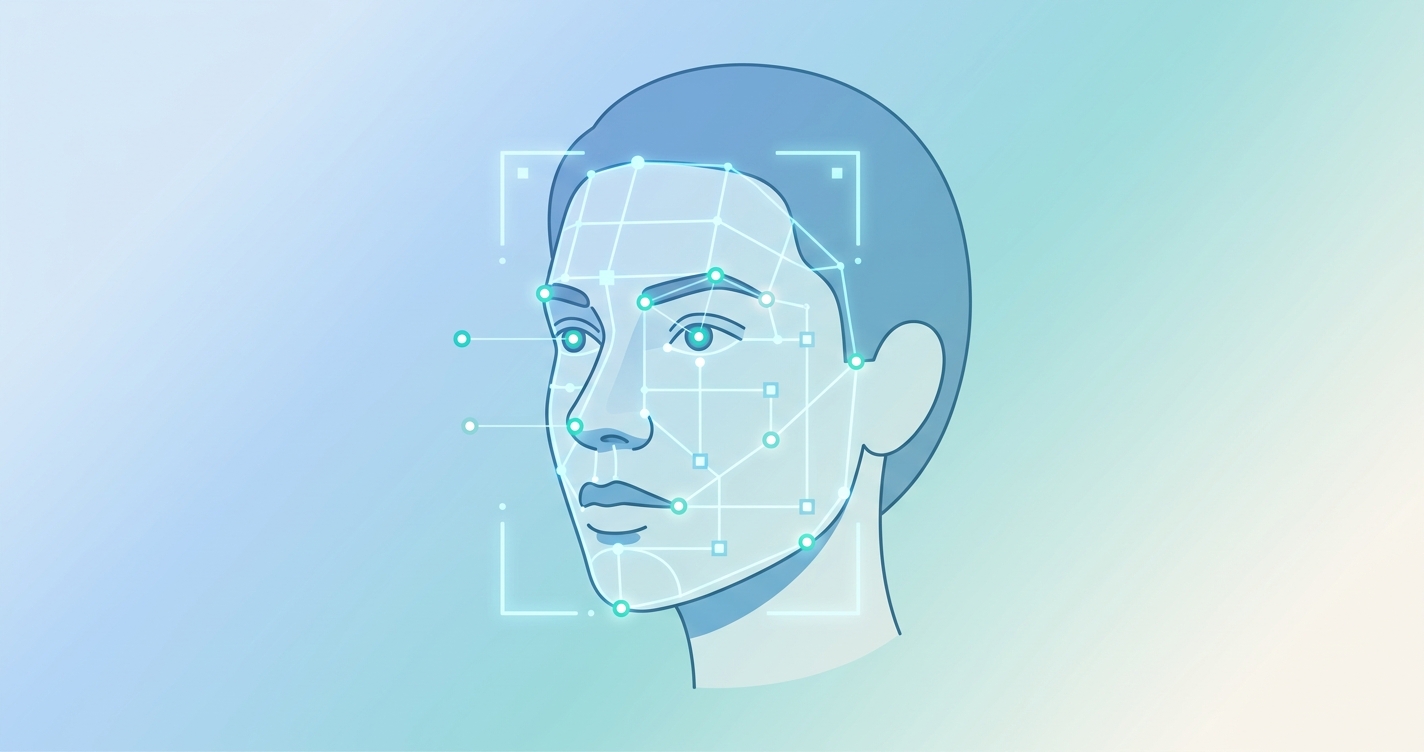
The industrialization of synthetic media has created a new class of digital risk, moving beyond static image manipulation into the realm of convincing, real-time video and audio deepfakes. For identity verification vendors, financial institutions, and KYC providers, the core challenge is no longer just authenticating a document, but verifying the liveness and authenticity of the person on the other side of the screen. The ability to detect AI-generated faces in real time is now a foundational requirement for digital trust and security.
"In 2023, the financial services sector witnessed a staggering 3,000% increase in deepfake fraud incidents in the United States alone. This surge highlights a critical vulnerability in existing identity verification protocols."
- Source: Ping Identity, 2023
The new frontline: real-time analysis to detect ai-generated faces
Traditional deepfake detection often relied on offline analysis of video files, searching for digital artifacts left behind by generative adversarial networks (GANs). However, as attackers shift to live injection attacks during video onboarding or authentication, the defense must also operate in real time. To detect AI generated faces real time requires a multi-layered approach that analyzes data streams from the camera feed, looking for subtle inconsistencies that betray a synthetic origin.
These systems must process video frames with minimal latency to be effective in live scenarios, such as a bank's video-based KYC check. Key methods include spatial and temporal analysis. Spatial analysis focuses on single frames, looking for unnatural textures, impossible lighting, or irregularities in facial features. Temporal analysis examines the sequence of frames, searching for abnormal transitions, unnatural blinking patterns (or a lack thereof), and discrepancies in head movement. More advanced techniques analyze frequency domains, as GAN-generated videos can exhibit a different frequency signature than authentic camera footage. Researchers like Hany Farid at UC Berkeley have extensively documented how artifacts in color, light, and focus can expose fakes, though generative models are constantly improving to erase these tells.
The challenge is magnified by the processing power required. Efficient models, often variants of Convolutional Neural Networks (CNNs), must be optimized to run on-device or with near-instantaneous server-side response to avoid disrupting the user experience.
| Liveness Detection Method | How It Works | Common Failure Points | Real-Time Suitability |
|---|---|---|---|
| Active Liveness (Challenge-Response) | User is prompted to perform an action (e.g., blink, turn head, smile). | Can be spoofed by high-quality video recordings or 3D models. Adds user friction. | Moderate. Latency in challenge delivery and response analysis can be an issue. |
| Passive Liveness (Signal Analysis) | Analyzes intrinsic signals from the video feed without user prompts (e.g., texture, reflections, blood flow). | Susceptible to sophisticated injection attacks if relying only on basic texture or movement analysis. | High. Runs in the background, offering a seamless user experience and continuous verification. |
Industry Applications
Financial Services and KYC
For banks and fintech companies, the primary application is preventing account opening fraud. Fraudsters use synthetic identities, often pairing a real person's stolen data with an AI-generated face, to open accounts for money laundering or other illicit activities. Real-time detection during video onboarding is critical. The ability to detect AI generated faces real time prevents these synthetic identities from ever entering the financial system, hardening security far beyond traditional document checks. Some financial institutions now predict that deepfake fraud will become their single greatest cybersecurity challenge within the next three years.
Remote identity verification
Identity verification providers that serve the gig economy, crypto exchanges, and other digital platforms rely on liveness checks to ensure the person creating an account is real and present. As deepfake technology becomes more accessible, simple "blink-and-you're-in" tests are no longer sufficient. Liveness detection that can distinguish between a live human and a sophisticated AI-generated avatar is necessary to maintain the integrity of these platforms and prevent widespread fraud.
Trust and safety
Social media and dating apps use identity verification to prevent catfishing and other forms of online abuse. The proliferation of easily accessible face-swapping and generation tools makes it trivial to create fake profiles at scale. Real-time analysis can flag or block accounts using synthetic media during profile creation or video chats, protecting users from scams and manipulation.
Current research and evidence
The academic and security communities are in a constant arms race with the creators of generative AI models. Research presented in 2023 shows a clear trend: while detection models are becoming more sophisticated, so are the deepfakes.
- The Generalization Problem: A significant finding from multiple studies, including a 2023 review published by researchers from the University of Sfax, is that many detection models perform well on benchmark datasets like FaceForensics++ and Celeb-DF but see their accuracy drop significantly, sometimes by as much as 45-50%, when exposed to "in-the-wild" deepfakes from social media. These models often overfit to the specific artifacts of the datasets they were trained on.
- Hybrid Models: To combat this, researchers are developing hybrid deep learning models. One approach combines a Convolutional Neural Network (CNN) for spatial analysis, a Long Short-Term Memory (LSTM) network for temporal analysis, and other components like ResNet50 to achieve high accuracy. These models can simultaneously analyze pixel data, motion, and other cues, making them more robust.
- Physiological Signals: The most promising area of research is the analysis of physiological signals that are involuntarily present in live humans but absent in synthetic creations. Remote photoplethysmography (rPPG), which detects the subtle skin color changes caused by blood circulation, is a leading example. A 2022 study by researchers at the University of Oulu demonstrated that rPPG is a robust indicator of liveness that is extremely difficult for current AI models to replicate convincingly. Since deepfakes do not have a heartbeat, they lack a corresponding blood flow signal.
The future of ai-generated face detection
The future of detection lies in a multi-modal, signal-based approach. Relying on a single type of artifact is a losing game, as generative models will eventually learn to overcome it. The next generation of security systems will fuse multiple data streams in real-time:
- Video Analysis: Advanced spatial-temporal analysis for artifacts.
- Physiological Sensing: rPPG and other methods to confirm a live, biological human.
- Behavioral Biometrics: Analyzing how the user interacts with the device, such as typing cadence or mouse movements, as an additional layer of identity assurance.
Ultimately, the goal is to build a verification system where the cost and complexity of generating a spoof are prohibitively high. As GANs and diffusion models become more powerful, proving a person is real will depend less on finding a single "gotcha" artifact and more on confirming a baseline of biological authenticity.
Frequently asked questions
Q: What is the difference between a deepfake and a presentation attack? A: A presentation attack uses a physical artifact, like a printed photo, a mask, or a video playing on a screen, to fool a biometric system. A deepfake is a form of digital injection attack where the video feed itself is created or manipulated by AI, often in real time, without any physical object presented to the camera.
Q: Why can't we just use active liveness detection, like asking the user to blink? A: Early active liveness systems were effective but are now increasingly defeated. Simple challenges like blinking or smiling can be reproduced by sophisticated deepfakes or even a well-timed video recording. They also introduce friction into the user experience, leading to higher drop-off rates during onboarding.
Q: How does rPPG work to detect AI-generated faces? A: Remote photoplethysmography (rPPG) is an optical technique that measures changes in light reflected from the skin. These changes correspond to the flow of blood through subcutaneous vessels, which is driven by the user's heartbeat. AI-generated faces are simply pixels on a screen; they have no underlying biological system and therefore no blood flow, making its absence a reliable indicator of a fake.
The fight against AI-driven identity fraud requires a new generation of security tools. As deepfake technology continues to evolve, passive, signal-based liveness detection that confirms a real, biological human is present will be essential for any organization that needs to establish trust remotely. Circadify is at the forefront of this space, developing solutions that secure the digital identity lifecycle against these advanced threats. To learn more about securing your enterprise platform, schedule a demo at circadify.com/solutions/fraud-detection.