
How Blood Flow Liveness Detection Stops Fake Faces
How liveness detection blood flow analysis reads the pulse under the skin to separate a live person from a deepfake, mask, or replay attack.
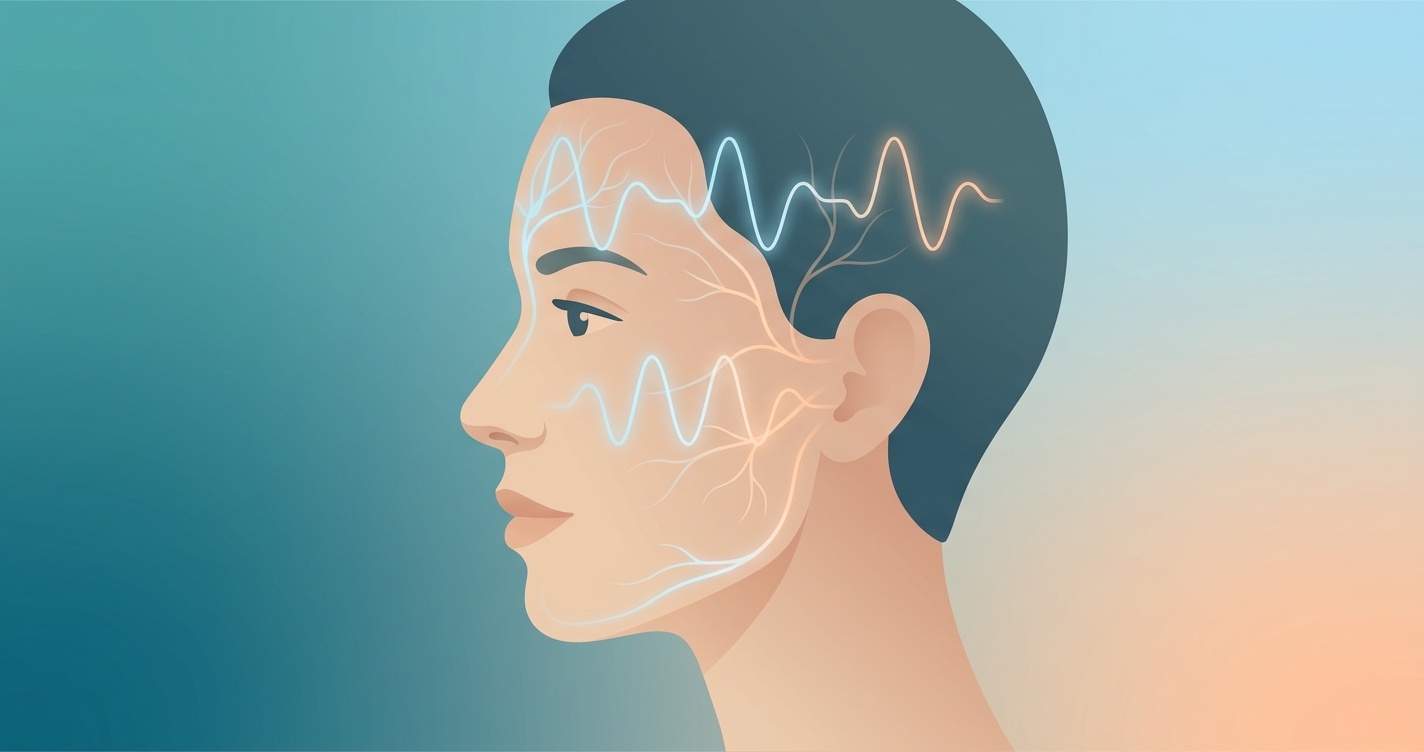
Every spoof attack shares one weakness it cannot engineer away: it has no heartbeat. A printed photo, a high-resolution replay video, a silicone mask, and a generative deepfake can all reproduce the geometry, texture, and motion of a human face. None of them circulates blood. That single physiological fact is the foundation of liveness detection blood flow analysis, an approach that asks a different question than traditional face matching. Instead of asking whether a face looks real, it measures whether the tissue behind that face is actually alive. For identity verification vendors and fraud teams watching synthetic media scale faster than legacy detectors can adapt, the pulse under the skin has become one of the few signals an attacker still cannot fake on demand.
"rPPG signals inherently contain liveness information that is highly resistant to spoofing," report researchers reviewing remote photoplethysmography for face anti-spoofing, noting that 3D masks block the genuine heartbeat signal entirely while a live face continues to broadcast it through subtle skin color changes.
How liveness detection blood flow analysis works
When your heart beats, it pushes a wave of oxygenated blood through the capillary beds just below the surface of your skin. Hemoglobin absorbs and reflects light differently depending on how much blood is present at any instant, so the face brightens and darkens in a rhythmic pattern far too faint for the human eye to notice. A standard RGB camera, however, can capture it. The technique that recovers this signal from ordinary video is called remote photoplethysmography, or rPPG, and it converts those micro-fluctuations in skin color into a waveform that tracks the cardiac cycle in real time.
Blood flow face verification works by isolating that waveform across multiple regions of the face, the forehead, cheeks, and nose bridge, then checking three things at once:
- A periodic signal exists at a plausible human heart rate, roughly 45 to 180 beats per minute.
- The signal is coherent across facial regions in the way real perfusion is, with consistent timing differences between areas.
- The waveform morphology matches the shape of a genuine pulse rather than synthetic noise or a flat, lifeless surface.
A spoof fails at least one of these tests. A printed photo or screen replay has no pulse at all. A 3D mask covers the live capillaries, so no signal reaches the camera. A deepfake renders pixels that were never connected to a circulatory system, so any apparent rhythm is either absent or statistically inconsistent with real blood flow. This is why pulse detection liveness sits in a different category from motion-based or texture-based checks: it targets a property of biology, not appearance.
How blood flow detection compares to other liveness methods
| Method | What it measures | Defeats deepfakes? | User friction | Common failure mode |
|---|---|---|---|---|
| Blood flow / rPPG (passive) | Cardiac pulse under the skin | Yes, no synthetic pulse signal | None, runs on standard video | Needs a few seconds of stable footage |
| Active challenge-response | User follows on-screen prompts | Partial, animated deepfakes can comply | High, blink, turn, smile | Slows conversion, frustrates users |
| Texture / frame analysis | Pixel artifacts and edges | Weakening as generators improve | None | Loses ground to each new model |
| 3D depth sensing | Facial geometry and depth | Partial, defeated by quality masks | Medium, special hardware | Hardware dependent |
| Document plus selfie match | Face-to-ID similarity | No, not a liveness test | Low | Confirms match, not life |
The table makes the core distinction visible. Most methods inspect the surface of an image. Blood flow anti-spoofing inspects the subject behind it.
Industry applications of blood flow anti-spoofing
Banking and account opening
Remote account opening is the most contested moment in financial services, because a synthetic face injected into the onboarding stream can create a fraudulent identity that passes every downstream check. Real face detection technology based on perfusion gives fraud teams a passive gate: the applicant either has a measurable pulse or the session is flagged before an account is provisioned. Because it runs on the video the user already submits, it adds security without adding the friction that drives applicants to abandon onboarding.
Kyc and identity verification providers
KYC vendors increasingly compete on the strength of their presentation attack detection rather than on document parsing alone. Layering blood flow face verification underneath existing liveness flows lets a provider counter injection attacks and replayed footage that look pixel-perfect to frame-level analysis. The signal degrades gracefully too: even partial perfusion data raises confidence that a live human, not a rendered surface, is on the other end.
Contact centers and high-value transactions
Voice authentication has eroded as voice cloning matured, pushing call centers toward video-based identity proofing for password resets and large transfers. A passive pulse check during a verification call confirms a living caller without forcing them through scripted gestures, which matters when the caller is stressed or non-technical.
Current research and evidence
The academic foundation here is substantial. Work led by P.C. Yuen and colleagues at Hong Kong Baptist University established that rPPG provides a robust liveness cue specifically because 3D masks suppress the heartbeat signal that genuine skin emits, making perfusion a natural counter to high-end mask attacks. A 2024 review of deepfake detection techniques using rPPG, published by researchers at Torrens University Australia, documents that the face forgery process inevitably disrupts the periodic color changes tied to blood flow, leaving detectable inconsistencies even when a deepfake looks flawless frame by frame.
The field is candid about the arms race, which is a sign of its maturity rather than a weakness. At the Netherlands Forensic Institute, Zeno Geradts and collaborators have advanced methods that read blood flow patterns across the face to expose manipulated video. At the same time, a 2025 study published in Frontiers warned that the newest high-quality deepfakes can now carry a realistic global pulse rate, meaning a single averaged heart rate is no longer sufficient on its own. The research consensus points to the same answer: detection has to move from a single global pulse to the spatial distribution of blood flow, the fine-grained differences in timing and amplitude between facial regions that a generator does not reproduce correctly.
Independent reporting reinforces the practical stakes. Coverage in Computer Weekly and The Irish Times of the Dutch heartbeat-detection work shows the technique crossing from laboratory papers into forensic and commercial use. The honest caveats noted across this literature, sensitivity to lighting, motion, and observation time, are exactly the engineering problems vendors must solve, and they are tractable compared with the open-ended difficulty of chasing each new generative model by its artifacts.
The future of blood flow liveness detection
The trajectory is clear. As generators close the gap on appearance, defenders are moving deeper into physiology that is harder to synthesize. Three directions stand out:
- Spatial perfusion mapping. Rather than estimating one heart rate, systems will model how the pulse wave travels across the face, a pattern current synthesis pipelines fail to render consistently.
- Multi-signal fusion. Blood flow combined with micro-motion and depth cues raises the cost of a successful attack, since a spoof would have to defeat several independent physiological tests simultaneously.
- Standardized benchmarking. As the ISO/IEC 30107-3 framework for presentation attack detection matures, expect perfusion-based methods to be evaluated against injection and synthetic-media vectors, not only physical artifacts.
The strategic point for fraud teams is that liveness detection blood flow analysis attacks the problem at its root. An attacker can buy a better generator every quarter, but they cannot give a rendered face a circulatory system. That asymmetry is durable in a way that pixel-level detection has never been.
Frequently asked questions
What is liveness detection blood flow analysis? It is a method that uses remote photoplethysmography to read the faint color changes a heartbeat produces in facial skin. If a live pulse is present and consistent across the face, the subject is treated as a real person; if it is absent or inconsistent, the system flags a possible spoof.
Can a deepfake fake a heartbeat? Some advanced deepfakes can now mimic a single global pulse rate, which is why detection has shifted toward analyzing the spatial distribution of blood flow. The localized timing and amplitude of perfusion across different facial regions remain very difficult for generators to reproduce accurately.
Does blood flow detection require special hardware? No. The signal can be recovered from standard RGB video captured by ordinary webcams and phone cameras, which is why it can run passively inside existing verification flows. The main requirements are adequate lighting and a few seconds of reasonably stable footage.
How is this different from asking a user to blink or turn their head? Active challenge-response checks confirm that a face can follow instructions, which animated deepfakes can increasingly do. Pulse detection liveness confirms a physiological property of living tissue and runs without prompting the user, reducing friction while raising the security bar.
Circadify is building in exactly this space, applying blood flow analysis to separate live humans from synthetic and replayed faces at the point of verification. Identity verification vendors and fraud teams who want the technical detail can book an enterprise security demo for a full overview of how perfusion-based liveness fits into a modern anti-spoofing stack.