
How to Verify a Real Customer From Their Phone in Seconds
Learn how to verify a real customer online in seconds using phone-based face checks that read blood-flow signals to confirm a living human without passwords.
The fastest way to confirm a person is real is no longer a password, a one-time code, or a series of head turns. It is a few seconds of camera footage that captures something a synthetic attacker cannot fake: the pulse of living tissue. For fintech onboarding teams and KYC providers trying to verify a real customer online, the bottleneck has shifted from "does this face match the document" to "is there a living human behind the lens at all." That single question now decides whether an account belongs to a genuine applicant or a deepfake assembled in minutes.
The reason this matters is economic as much as it is technical. Every extra step in a verification flow costs conversions, and every gap in that flow invites fraud. A phone-based check that reads physiological signals promises to close both gaps at once: lower friction for real users, higher walls for synthetic ones.
"Synthetic identity fraud increased eight-fold in 2025, becoming the fastest-growing fraud type worldwide and accounting for 11 percent of all reported fraud." - LexisNexis Risk Solutions, reported by Biometric Update, 2025
How to verify a real customer online using blood-flow signals
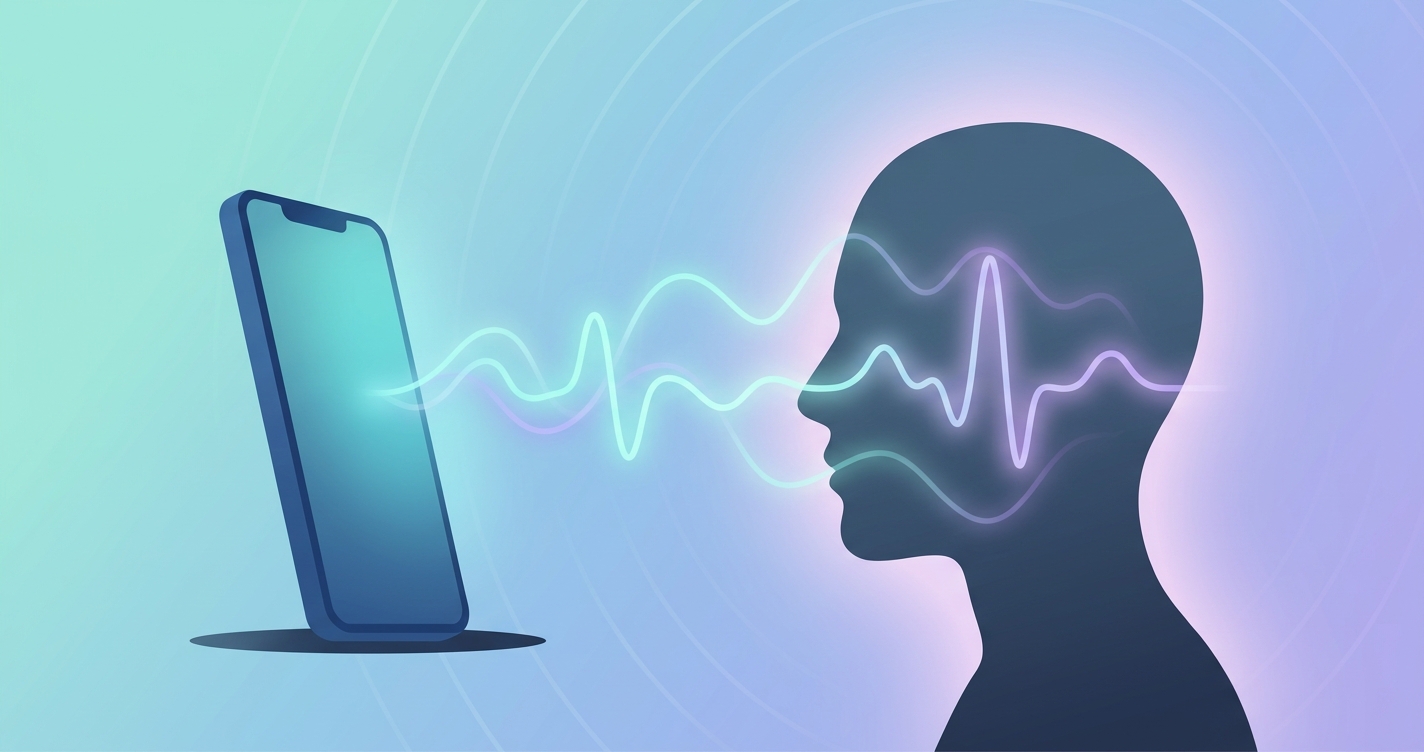
To verify a real customer online without passwords or clunky steps, the most promising approach reads what the human body does automatically. Remote photoplethysmography, or rPPG, uses an ordinary smartphone camera to detect tiny color changes in the skin caused by blood circulating beneath the surface. Each heartbeat pushes blood through facial capillaries, subtly shifting how skin absorbs and reflects ambient light. The human eye cannot see this, but a camera sampling enough frames can. The result is a heartbeat waveform extracted from video, with no contact, no wearable, and no special hardware.
This signal is what separates a living person from a presentation attack. A printed photo has no pulse. A replayed video has a corrupted or absent blood-flow rhythm. A deepfake rendered frame by frame does not reproduce the consistent, physiologically plausible pulse pattern across the face that a real person produces. As researchers studying face liveness detection have noted, combining rPPG features with deep learning models such as convolutional neural networks gives systems a way to flag spoofs that look perfect to the naked eye.
The user experience is the part fintech teams care about. Instead of typing codes or performing scripted gestures, the customer simply holds the phone to their face for a few seconds while the front camera records. The check runs passively in the background. From the applicant's perspective, the remote identity check feels like a brief selfie. From the security perspective, it is a physiological proof of life.
Comparing methods to prove a real person online
Not every verification method answers the same question, and the differences matter when you are balancing fraud loss against drop-off. The table below compares common approaches teams use to prove a real person online.
| Method | Friction for user | Stops deepfakes | Stops replay or photo | Hardware needed | Time to complete |
|---|---|---|---|---|---|
| Password plus OTP | Medium | No | No | None | 20 to 60 seconds |
| Knowledge-based questions | High | No | No | None | 30 to 90 seconds |
| Document scan only | Medium | No | Partial | Camera | 30 to 120 seconds |
| Active liveness (head turns, blinks) | High | Partial | Partial | Camera | 15 to 45 seconds |
| Passive rPPG face check | Low | Strong | Strong | Standard camera | Under 10 seconds |
The pattern is clear. Methods built on secrets, such as passwords and security questions, verify knowledge rather than humanity, and stolen credentials defeat them instantly. Document scans confirm a credential exists but say nothing about who is holding the phone. Active liveness adds physical motion as a defense, but it raises friction and can still be defeated by sophisticated injected video. A passive blood-flow check sits in the corner that fintech teams want: low effort for the customer, high cost for the attacker.
Key advantages of a phone-based blood-flow approach include:
- No passwords or codes to remember, type, or intercept
- Works on standard front-facing cameras without depth sensors
- Passive capture that does not interrupt the onboarding flow
- A physiological signal that synthetic media struggles to reproduce
- Compatible with existing mobile face verification and document checks
Industry Applications
Fintech Onboarding
New account opening is where synthetic identity fraud concentrates, because a fake identity that survives onboarding can borrow, launder, or cash out before anyone notices. A passive blood-flow check at the moment of account creation confirms the applicant is a living human before credit or funds are extended. Because the check completes in seconds, it does not push abandonment rates up the way multi-step active flows can.
KYC and Compliance Providers
KYC vendors face a dual mandate: satisfy regulators and keep client conversion rates high. With financial penalties for KYC failures rising sharply in 2025, providers need defenses that hold up against AI-generated documents and injected deepfake video. Adding a physiological liveness layer to a remote identity check gives compliance teams evidence that a real person, not a rendered face, completed the session.
High-risk transactions and re-verification
Beyond onboarding, the same mobile face verification can gate sensitive actions such as large transfers, password resets, or changes to account ownership. A quick blood-flow check at these moments confirms the genuine account holder is present rather than an attacker who has compromised credentials.
Current research and evidence
The research base behind blood-flow liveness has matured quickly. Studies on face liveness detection using rPPG features combined with contextual patch-based CNN models have demonstrated that physiological signals add a discriminating layer against print, replay, and mask attacks. Work published through MDPI and arXiv in recent years continues to refine rPPG accuracy under the messy conditions that matter in production, including motion, varied lighting, and a range of skin tones. Notably, research summarized under the title "Can we generate real faces from rPPG signals? Probably not" suggests the inverse problem is hard, which is encouraging for defenders: the pulse signal is difficult for an attacker to synthesize convincingly.
The threat data explains the urgency. According to reporting on 2025 fraud trends, deepfake attacks have grown by more than 2,000 percent over three years and now appear in roughly one in fifteen identity-fraud attempts. Industry analysts have tracked digital document forgeries rising 244 percent year over year, and the projected volume of deepfake videos was expected to reach 8 million in 2025, up from 500,000 in 2023. Against that backdrop, methods that verify a credential without verifying a heartbeat are increasingly exposed.
Researchers do flag open challenges. rPPG signal quality can degrade with poor lighting, heavy compression, or rapid movement, and ensuring consistent performance across skin tones remains an active area of study. This is why most credible deployments treat blood-flow analysis as one strong layer within a multi-signal verification stack rather than a single point of decision.
The future of verifying a real customer online
The direction of travel points toward verification that is invisible to honest users and unforgiving to synthetic ones. As generative models improve, defenses that rely on visual appearance alone will keep losing ground, while signals rooted in human physiology stay difficult to fake at scale. Expect three shifts over the next few years.
- Passive becomes the default. Friction-heavy active checks will give way to background analysis that completes before a user notices.
- Physiological signals join the standard stack. Blood-flow liveness will sit alongside document verification and device intelligence as a routine layer.
- Continuous and on-device checks expand. Verification will extend beyond onboarding into ongoing session integrity, with more processing happening on the phone for privacy and speed.
The organizations that adapt fastest will be those that treat liveness not as a compliance checkbox but as a measurable defense against an industrialized fraud supply chain.
Frequently asked questions
How does a phone verify a real customer in seconds without a password? The phone camera records a few seconds of video and analyzes subtle skin-color changes caused by blood flow. That pulse signal confirms a living person is present, so there is no need for passwords, codes, or scripted movements.
Can a deepfake pass a blood-flow liveness check? Synthetic media struggles to reproduce a consistent, physiologically plausible pulse across the face. Because deepfakes are rendered rather than alive, blood-flow analysis gives systems a strong signal to flag them, especially when combined with other verification layers.
Does this work on a normal smartphone? Yes. Remote photoplethysmography uses standard front-facing cameras and ambient light. It does not require depth sensors or specialized hardware, which makes it practical for mass-market mobile face verification.
Is blood-flow verification reliable across different skin tones and lighting? Accuracy can be affected by lighting, motion, and skin tone, which is why ongoing research focuses on robustness in real-world conditions. In practice, blood-flow checks work best as one layer inside a multi-signal remote identity check.
Circadify is addressing this space directly, building liveness verification that reads real blood flow to separate living customers from synthetic media at the moment of onboarding. To see how a phone-based check can verify a real customer online in seconds, explore an enterprise security demo.