
What Synthetic Media Detection Means for Fraud Teams
A plain-language guide to what synthetic media detection is, why it matters for fraud teams, and where blood-flow liveness fits a modern defense stack.
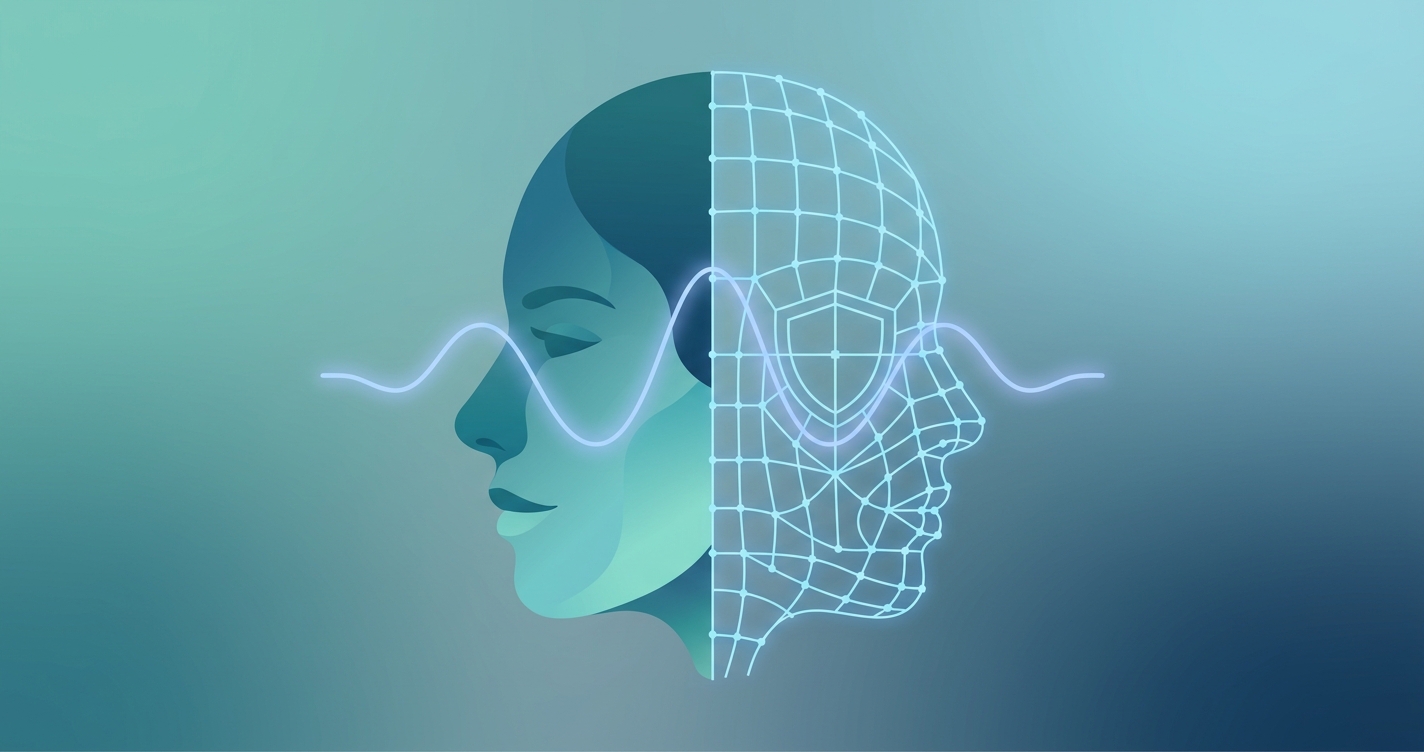
Fraud leaders have spent the last two years watching a familiar threat mutate into something they cannot see with the naked eye. The selfie that opens a bank account, the face on a video KYC call, the agent on a support line, all of these can now be generated by software rather than captured from a living person. That shift is what makes synthetic media detection a board-level concern rather than a niche engineering problem. For non-technical fraud teams, the question is no longer whether attackers can fake a face. They can, cheaply. The question is how your stack proves a real human is present.
"Human detection rates for high-quality video deepfakes fall as low as 24.5 percent, and in a 2025 study only 0.1 percent of participants correctly classified every real and fake sample.", reported across 2025 deepfake fraud analyses including DeepStrike and Veriff
What is synthetic media detection
Synthetic media detection is the set of technologies and processes used to determine whether an image, video, or audio stream was generated or manipulated by AI rather than recorded from a real person or event. In a fraud context, that means flagging deepfake faces, face swaps, AI-generated identity photos, and replayed or injected video before they pass an identity check. When people ask what is synthetic media detection in practical terms, the honest answer is that it is a layered defense, not a single button. No one signal catches every attack, so mature programs combine several independent checks.
It helps to separate the family of attacks fraud teams actually face:
- AI generated face detection, where a face that never existed is created from scratch and used for a synthetic identity.
- Face swap and reenactment, where a real victim's likeness is grafted onto an attacker's movements.
- Replay attacks, where a genuine recording is shown to a camera.
- Injection attacks, where synthetic video is fed directly into the verification pipeline, bypassing the camera entirely.
Each category defeats a different assumption. A document check assumes the ID is genuine. A face-match check assumes the face belongs to the applicant. Synthetic media detection adds the missing assumption test: is this a real, live human at all?
Detection approaches compared
Fraud teams evaluating fraud prevention technology generally encounter four broad detection strategies. They are not mutually exclusive, and the strongest stacks use more than one.
| Approach | What it checks | Strength | Weakness against modern deepfakes |
|---|---|---|---|
| Artifact / frame analysis | Pixel-level glitches, warping, compression traces | Cheap, fast, no user friction | Degrades as generative models improve; loses signal after re-encoding |
| Metadata and provenance | File origin, watermarks, capture history | Strong when present | Easily stripped; absent on most fraud |
| Active liveness | User performs a challenge (blink, turn, smile) | Intuitive, well understood | Hurts conversion; can be replayed or animated |
| Passive blood-flow liveness (rPPG) | Subtle skin color change from real blood flow | Frictionless; tied to human physiology | Needs adequate video quality and lighting |
The pattern most fraud leaders notice is that the first two rows weaken as the generators improve, while physiological signals stay anchored to something synthetic media struggles to fake: the body itself.
Where blood-flow liveness fits the stack
Remote photoplethysmography, or rPPG, measures the tiny periodic color changes in facial skin caused by blood pulsing through capillaries. A real face captured on a standard camera carries this faint heartbeat signal. A generated face, a printed mask, or a replayed clip generally does not reproduce a coherent, spatially consistent pulse. That is the core idea behind deepfake detection rPPG: instead of hunting for the artifacts a model left behind, you look for the biological signal a model failed to create.
This matters for fraud teams because it changes the arms race. Artifact detectors compete directly with generative models, and every improvement on the attacker side erodes the defender side. A physiological check asks a different question that does not get easier to fake just because the rendering got prettier.
In a defense stack, blood-flow liveness typically sits as a passive layer during the same selfie or video capture a user already provides. It does not require the customer to perform a challenge, which protects conversion, and it runs alongside document verification, face matching, device signals, and behavioral analytics rather than replacing them.
Industry Applications
Banks and fintech onboarding
Account opening is the highest-volume battleground. Industry reporting tied deepfakes to roughly one in twenty identity verification failures in 2025, and one in five biometric fraud attempts now involves a deepfake. For remote onboarding, a passive liveness layer lets fraud teams reject synthetic applicants without adding the friction that kills legitimate conversions.
Identity verification and KYC vendors
IDV and KYC providers sell trust. When the underlying liveness check can be defeated by an injected video, the entire chain of assurance collapses. Synthetic media detection that reads physiology gives vendors a differentiated line of defense to offer downstream customers, and a way to answer regulators asking how presentation and injection attacks are handled.
Contact centers and high-value transactions
Voice cloning rose sharply, with one 2024 analysis citing a 680 percent year-over-year increase in voice deepfakes. Video support and step-up authentication for large transfers face the same exposure. A liveness check that confirms a real, present human raises the cost of impersonation well beyond what a cloned voice or recycled clip can supply.
Current research and evidence
Academic work on physiological deepfake detection is now several years deep. Umur Aybars Ciftci, Ilke Demir, and Lijun Yin at Binghamton University introduced FakeCatcher in their 2020 IEEE Transactions on Pattern Analysis and Machine Intelligence paper, demonstrating that biological signals extracted from authentic portrait videos differ measurably from those in synthetic ones, with reported accuracy above 90 percent on then-current datasets. The same year, Javier Hernandez-Ortega and colleagues at the Universidad Autonoma de Madrid published DeepFakesON-Phys, using a convolutional attention network to read heart-rate cues for fake detection.
A 2024 comprehensive review in Applied Sciences (MDPI) surveyed the field of deepfake detection based on remote photoplethysmography, concluding that physiological signals offer a promising and generalizable cue while noting practical sensitivities to lighting, head motion, and camera quality. Those caveats matter for deployment: the research community is clear that blood-flow liveness is powerful but works best as one validated layer within a broader system.
The threat data gives the research urgency. Analyses through 2025 and early 2026 describe deepfake files growing from around 500,000 in 2023 toward roughly 8 million, with average losses near 500,000 dollars per deepfake-related business incident in 2024. The cryptocurrency and broader fintech sectors absorbed a disproportionate share of detected cases.
The future of synthetic media detection
Three shifts are likely to define the next phase. First, detection moves from reactive artifact spotting toward physiological and provenance signals that do not erode as generators improve. Second, injection attacks force the industry to secure the capture pathway itself, not just the content, because a perfect fake delivered straight into the pipeline never touches a real camera. Third, regulators and standards bodies will push for measurable presentation attack detection, extending the kind of testing already framed by ISO/IEC 30107-3 toward newer synthetic threats.
For fraud teams, the strategic takeaway is to stop treating synthetic media detection as a single vendor checkbox. The durable architecture is layered: document and data checks, face matching, device and behavioral signals, and a physiological liveness layer that is hard to fake because it is tied to a living body. Each layer covers a gap the others leave open.
Frequently asked questions
What is synthetic media detection in simple terms?
It is the practice of deciding whether a face, video, or voice was generated by AI or captured from a real person. For fraud teams it means catching deepfakes, face swaps, and AI-generated identities before they pass a verification check.
How is deepfake detection rPPG different from artifact analysis?
Artifact analysis hunts for the visual mistakes a generator leaves behind, which fade as the models improve. rPPG looks for the blood-flow signal a real face produces and a fake one usually lacks, so it tests for the presence of a human rather than the imperfections of a fake.
Can synthetic media detection stop injection attacks?
It helps, but no single method is sufficient. Injection attacks bypass the camera, so teams need pipeline integrity checks alongside liveness. A physiological signal that a synthetic feed cannot reproduce coherently still raises the bar significantly.
Does adding liveness detection hurt customer conversion?
Active challenges that ask users to blink or turn can add friction. Passive blood-flow liveness runs on the selfie or video already being captured, so it adds security without an extra step for the legitimate customer.
Circadify is building toward this layered future, applying blood-flow liveness so identity verification vendors and fintech fraud teams can detect synthetic media by reading real human physiology rather than chasing generator artifacts. Teams evaluating their defense stack can request an enterprise security demo to see where rPPG fits.